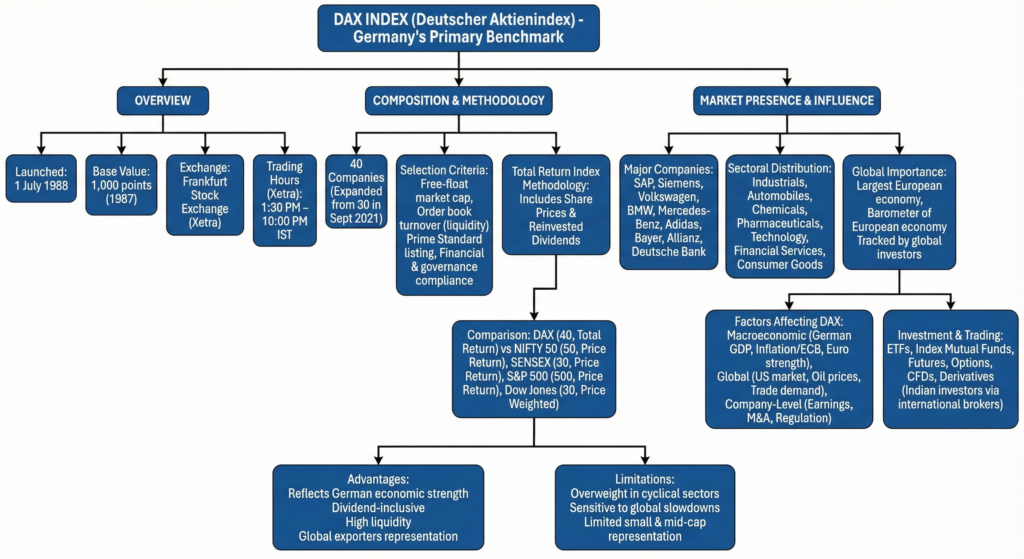
DAX stands for Deutscher Aktienindex.
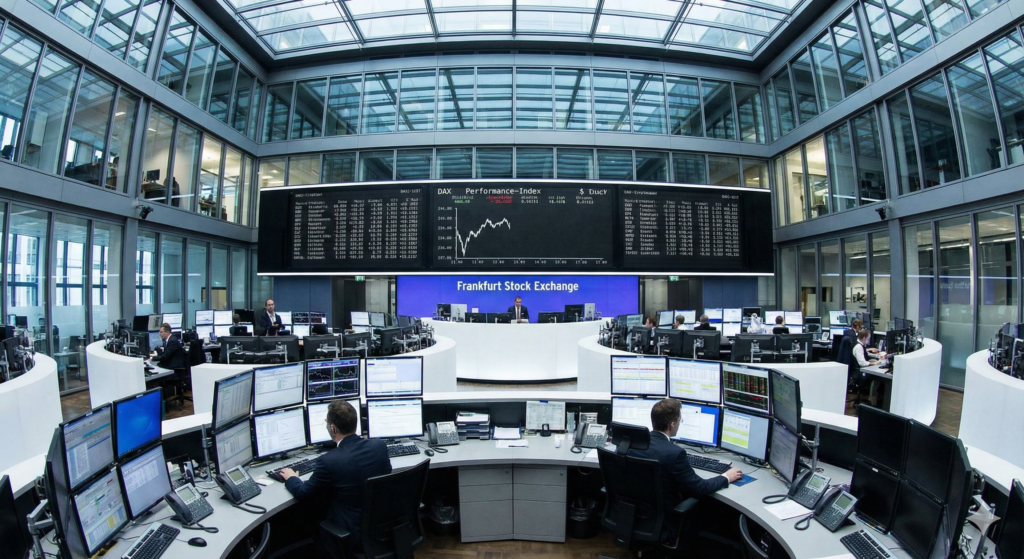
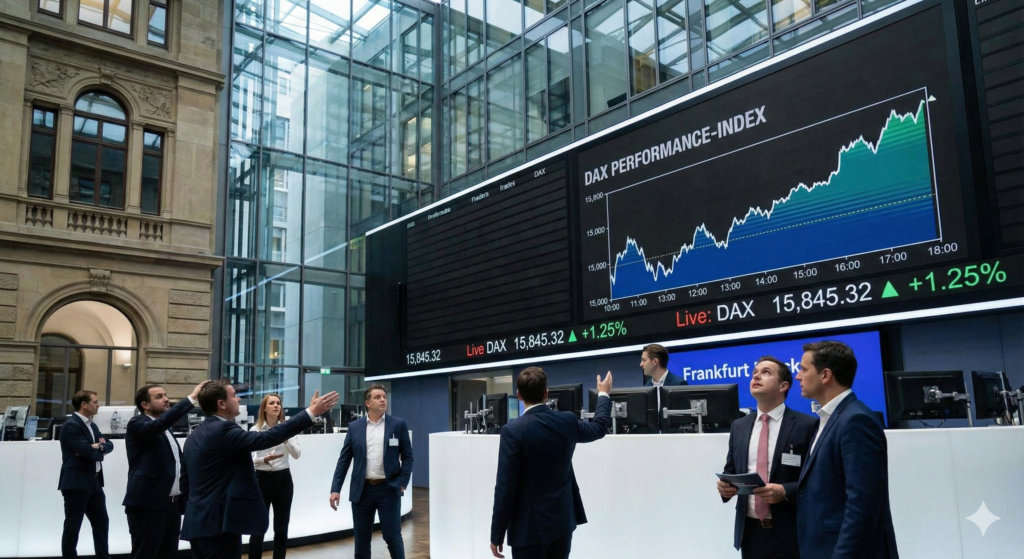
It is Germany’s primary benchmark stock market index, representing the performance of the largest and most liquid German companies listed on the Frankfurt Stock Exchange.
- Launched: 1 July 1988
- Base value: 1,000 points (as of 1987)
- Exchange: Frankfurt Stock Exchange (Xetra platform)
2. Composition of the DAX Index
Number of Companies
- 40 companies (expanded from 30 to 40 in September 2021)
Selection Criteria
Companies are selected based on:
- Free-float market capitalization
- Order book turnover (liquidity)
- Listing on Prime Standard segment
- Compliance with strict financial reporting and corporate governance rules
3. Methodology of Calculation
Free-Float Market Capitalization
Only shares available for public trading are considered.
Total Return Index
Unlike many indices, DAX is calculated as a Total Return Index, meaning:
- Share prices
- Dividends (reinvested)
are both included in index value.
This makes DAX structurally different from indices like Dow Jones (price-weighted).
4. Trading Hours
| Market | Timing |
| Xetra trading | 1:30 PM – 10:00 PM IST |
5. Major Companies in the DAX
Some well-known constituents include:
- SAP (Technology)
- Siemens (Industrial)
- Volkswagen (Automobile)
- BMW (Automobile)
- Mercedes-Benz Group
- Adidas (Consumer goods)
- Bayer (Pharmaceuticals & Chemicals)
- Allianz (Insurance)
- Deutsche Bank (Banking)
6. Sectoral Distribution
The DAX is diversified across major sectors:
- Industrials
- Automobiles
- Chemicals
- Pharmaceuticals
- Technology
- Financial Services
- Consumer Goods
Automobile and industrial sectors carry significant weight, making the DAX sensitive to global manufacturing trends.
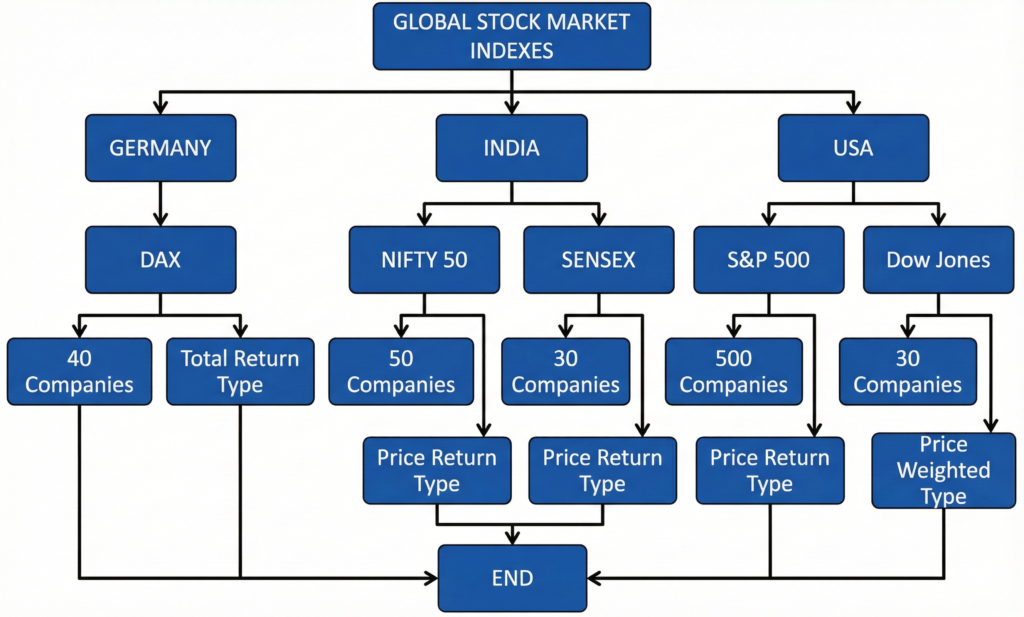
7. DAX vs Other Global Indices
| Index | Country | Companies | Type |
| DAX | Germany | 40 | Total Return |
| NIFTY 50 | India | 50 | Price Return |
| SENSEX | India | 30 | Price Return |
| S&P 500 | USA | 500 | Price Return |
| Dow Jones | USA | 30 | Price Weighted |
8. Factors Affecting the DAX Index
Macroeconomic Factors
- German GDP growth
- Inflation & interest rates (ECB decisions)
- Euro currency strength
Global Influences
- US stock market performance
- Oil and energy prices
- Global trade and export demand
Company-Level Factors
- Earnings reports
- Mergers & acquisitions
- Regulatory changes in the EU
9. How Can Investors Trade or Invest in DAX?
Investment Options
- ETFs (e.g., iShares Core DAX ETF)
- Index Mutual Funds (Europe-based)
Trading Options
- Futures
- Options
- CFDs
- Index-based derivatives
(Indian investors typically access DAX via international brokers.)
10. Advantages of the DAX Index
- Reflects Germany’s economic strength
- Dividend-inclusive calculation
- High liquidity
- Strong representation of global exporters
11. Limitations of the DAX
- Overweight in cyclical sectors
- Highly sensitive to global economic slowdowns
- Limited representation of small & mid-cap companies
12. Why is the DAX Important Globally?
- Germany is the largest economy in Europe
- DAX is considered a barometer of the European economy
- Heavily tracked by global institutional investors