In the world of superfoods, it’s often the largest or most exotic items that grab the headlines. Yet, sometimes the most profound health benefits are packaged in the smallest, most humble forms. Enter the pumpkin seed. Often discarded during Halloween carving, these small, green seeds (also known as pepitas) are nutritional powerhouses that have been prized for centuries.
Whether you are looking to boost your mineral intake, improve your sleep, or protect your heart, the pumpkin seed is a versatile ally. This blog will explore the science behind this tiny titan, visually guiding you through its composition and uses.
1. Deconstructing the Pepita: A Visual Guide
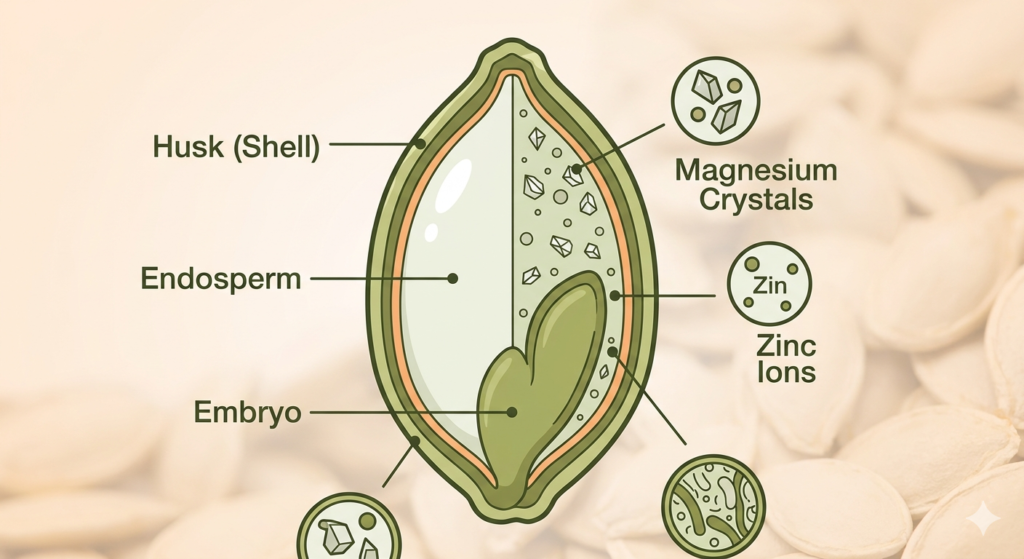
Before we discuss the benefits, it’s essential to understand exactly what a pumpkin seed is. When you scoop them out of a fresh pumpkin, they are encased in a tough, cream-colored shell. The nutrition, however, is concentrated inside.
Our first knowledge graphic provides a visual deconstruction of the seed, highlighting its key structural components and primary mineral deposits.
The Anatomy of Nutrition (Image 1 Description)
This botanical diagram illustrates a cross-section of the pepita (the green kernel). As shown in image_0.png, the nutrition is densely packed within the embryo and endosperm.
The graphic uses small icon callouts to visualize what’s happening at a microscopic level:
- Magnesium Crystals: Pumpkin seeds are one of the best natural sources of magnesium, crucial for blood pressure control and bone health.
- Zinc Ions: Vital for immune function and cell growth, the zinc content in these seeds is a major reason for their superfood status.
2. The Heavy Hitters: Magnesium, Zinc, and Sleep
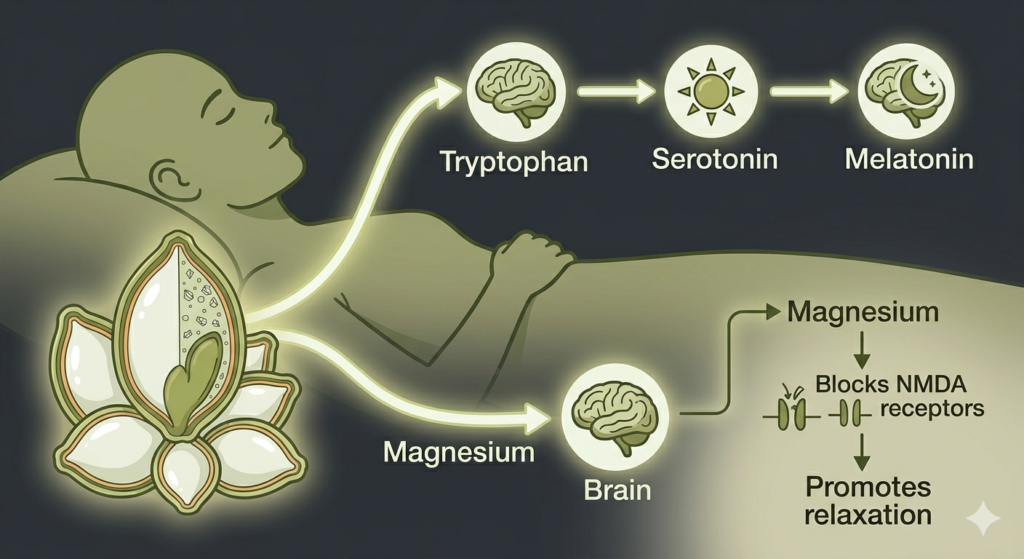
When we talk about the micronutrients in pumpkin seeds, Magnesium and Zinc dominate the conversation. However, pumpkin seeds are also an excellent source of a specific amino acid that regulates our internal clock: Tryptophan.
If you are looking to improve your sleep hygiene or boost your mood, the relationship between these elements is fascinating.
The Sleep and Relaxation Connection (Image 2 Description)
Building on the anatomical breakdown in Image 1, our second knowledge graphic (image_1.png) illustrates the biochemistry of relaxation. Following the Tryptophan pathway, we see the amino acid convert into Serotonin (the ‘feel-good’ neurotransmitter, sun icon) and eventually into Melatonin (the ‘sleep’ hormone, moon icon). This conversion is essential for regulating circadian rhythms.
Crucially, the graphic also visualizes the role of the Magnesium (identified as crystals in image_0.png). It shows how magnesium acts as a gatekeeper, blocking the NMDA receptors in the brain. By preventing these excitatory receptors from firing, magnesium promotes nervous system relaxation, preparing the body for deep rest.
3. Beyond the Mineral: Healthy Fats and Cardio Protection
While the minerals and amino acids are impressive, we cannot overlook the macronutrient profile. Pumpkin seeds are rich in healthy fats, specifically monounsaturated and polyunsaturated fatty acids (like Alpha-Linolenic Acid or ALA). They also contain phytosterols, compounds that are structurally similar to cholesterol.
These components are vital for maintaining a healthy cardiovascular system. The visual guide now shifts to illustrate this protective effect.
The Cardiovascular Defense System (Image 3 Description)
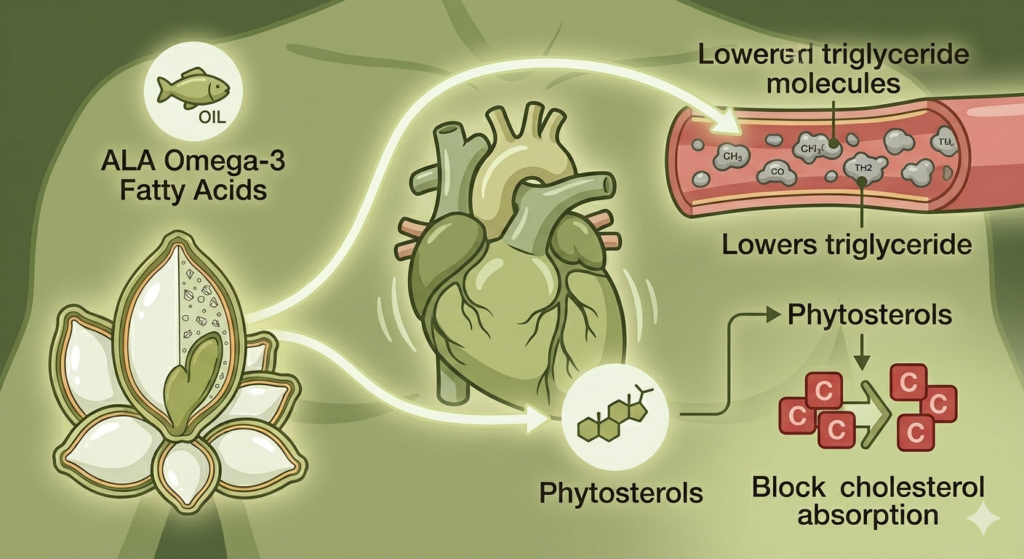
This infographic (image_2.png) maintains the clean, green, illustrative style established in the earlier images. It visualizes two primary defensive pathways supporting a healthy heart:
- ALA Omega-3 Fatty Acids: We see a stream of glowing ALA molecules (derived from the original cross-sectioned seeds, image_0.png) entering an artery. The visualization shows ALA actively reducing the presence of triglyceride molecules (the small gray blobs).
- Phytosterols: Another stream illustrates these plant compounds blocking the absorption of dietary cholesterol (visualized as red ‘C’ blocks). This dual action—reducing triglycerides and competing with cholesterol—is why pumpkin seeds are strongly associated with maintaining healthy blood pressure and cholesterol levels.
Conclusion: Small Seed, Big Impact
The journey from a simple cross-section of a seed to understanding its complex biochemical effects—from regulating sleep to protecting the heart—reveals the pumpkin seed to be a true nutritional powerhouse.
As our visual guide has shown, the intricate mechanisms (the Magnesium crystals, the Tryptophan pathways, the ALA streams) all work in concert to support systemic health. Integrating just a small handful of these seeds into your daily diet—in salads, smoothies, or just roasted—is an easy, effective way to harness the benefits of this tiny titan.