
If you’re searching for a simple, nutritious grain that bridges the gap between texture and comfort, look no further than Daliya.
Often overshadowed by fancy imported grains, Daliya (cracked wheat) is a humble staple that deserves a prime spot in your pantry. It is versatile, incredibly easy to cook, and carries a nutty flavor that adapts to both sweet and savory dishes. Let’s explore how to prepare it perfectly and incorporate it into your routine.
What is Daliya?
Daliya is simply whole raw wheat kernels that have been cleaned and then cracked into smaller, coarse pieces. Because it is unrefined, it retains the bran and germ of the wheat, making it highly nutritious and packed with fiber.
Before it can be used in recipes, the raw, hard grain needs a simple dry roast. This critical step prevents it from becoming sticky when cooked and unlocks a wonderful, toasted aroma. Here is what the essential, high-quality ingredient looks like when it is prepared for cooking:
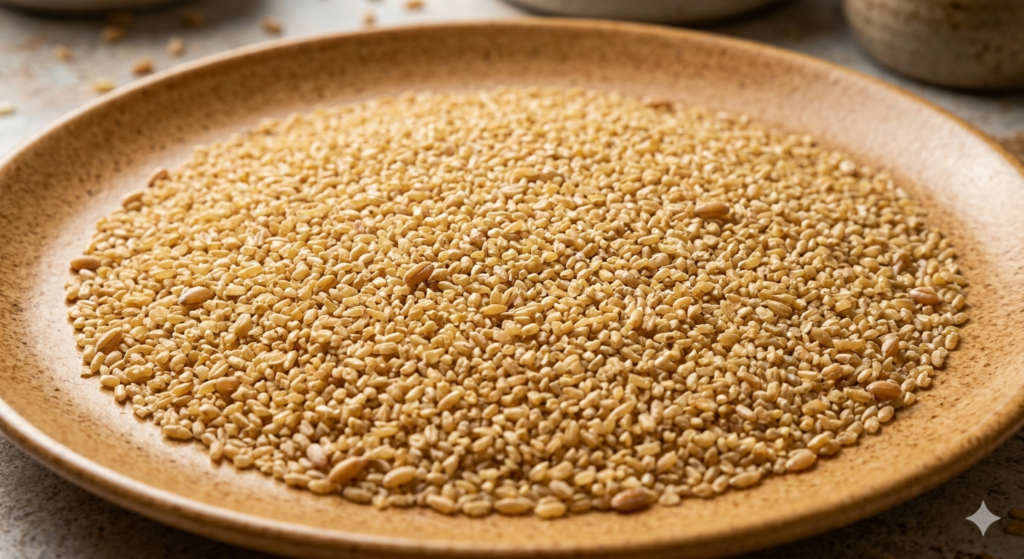
(Image 1: Close-up of roasted Daliya. Note the golden-brown hue that comes from dry roasting the cracked wheat, highlighting its rough, earthy texture.)
Mastering the Basic Preparation
Cooking Daliya is simple, but the roasting step shown above is mandatory. Once roasted, you have two primary paths: savory or sweet.
For a basic fluffy grain (perfect for salads or as a rice substitute), use a 2:1 water-to-Daliya ratio. You can boil it on the stovetop or use a pressure cooker for speed.
The most popular way to enjoy this grain, however, is as a satisfying breakfast.
The Sweet Morning Bowl
This is the ultimate comfort meal: Daliya cooked in milk until it softens into a creamy porridge. It is light, warm, and easily digestible. We love topping it with fresh fruits and nuts to enhance the texture contrast already present in the cracked grain.
Here is how we serve our classic sweet Daliya:
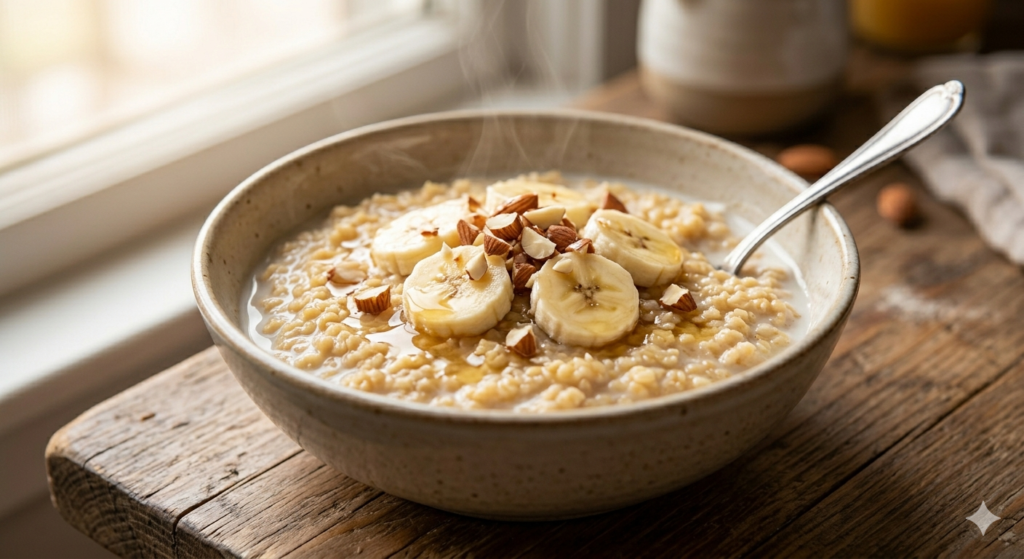
(Image 2: A steaming morning bowl of sweet Daliya porridge. It is creamy, lightly golden, and topped with fresh bananas, nuts, and honey. The soft morning light highlights its comforting texture.)
Going Savory: A One-Pot Meal
While the sweet porridge is classic, savory Daliya (often called Daliya Khichdi) is a powerhouse meal. It is light, nutritious, and incredibly satisfying.
In this version, we temper spices (like cumin and mustard seeds) in a little ghee or oil, add vegetables (carrots, peas, potatoes), and then cook the roasted Daliya and some moong dal together with water. The result is a hearty, wholesome one-pot meal that preserves the unique “bite” of the cracked wheat.
Here is a look at a savory preparation, vibrant with spices and vegetables:
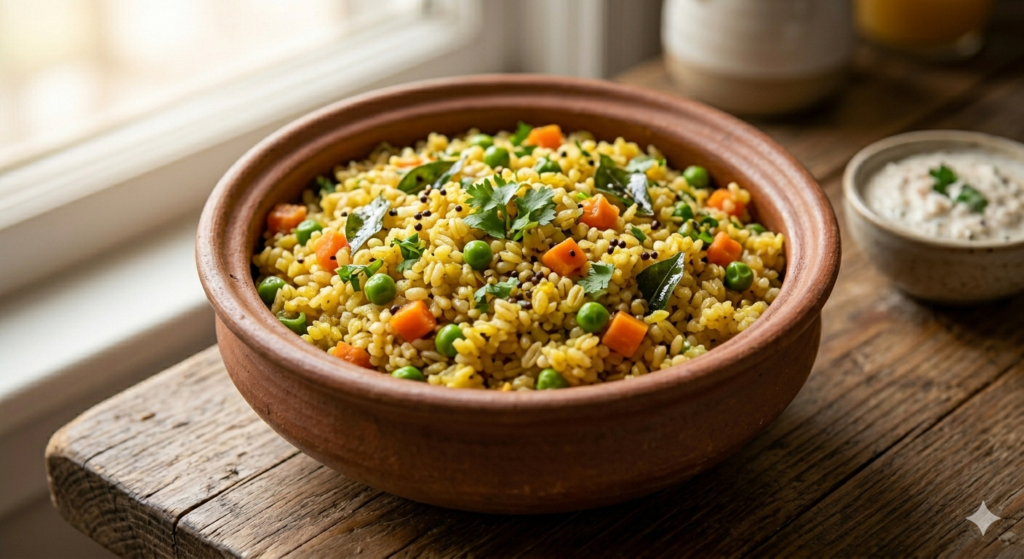
(Image 3: A rustic earthenware pot filled with savory Daliya upma. It features the cooked cracked wheat mixed with vibrant green peas and carrots, seasoned with mustard seeds and curry leaves. The daylight consistency is maintained across all three images.)
Conclusion
Daliya is a texture-rich, high-fiber alternative to refined grains that works for any meal of the day. It requires minimal effort to cook, provided you start with a good roast. Whether you prefer the creamy, sweet morning bowl or the hearty, vegetable-packed savory one-pot meal, Daliya is comfort food at its finest.
Know more about the gym.Gym Supplements: Do You Really Need Them? (Scientific Study Analysis)

One Response