
The Invisible Invader: The Long, Harmful Life of Plastic
We see plastic every day. A quick coffee cup lid, a convenient water bottle, a supermarket bag. It’s light, strong, and undeniably useful. But the cost of this convenience is a pollution crisis so vast and pervasive it is actively changing our planet. The true danger of plastic pollution isn’t just an eyesore; it’s a silent, persistent attack on every ecosystem and our own biology.
The Problem: When ‘Forever’ Becomes the Threat
The miracle of plastic is its durability. We designed it to last. But when we discard a “single-use” item after five minutes, that durability becomes its most terrifying trait. Plastic doesn’t truly decompose; it only fragments.
1. Ingested by Wildlife
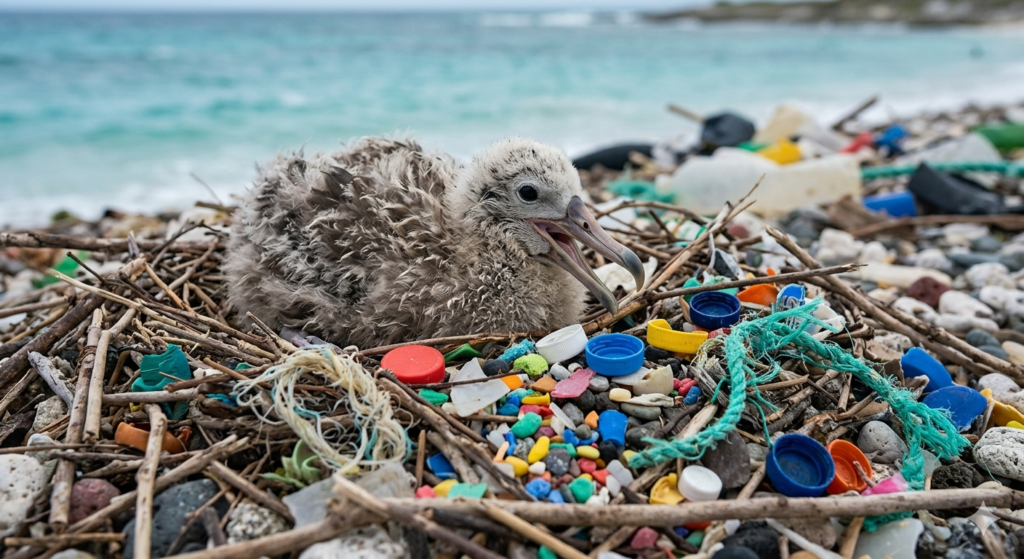
Our oceans have become the final destination for millions of tons of plastic waste annually. We have all seen heart-wrenching images of sea turtles entangled in six-pack rings. The reality of ingestion is just as devastating. Marine animals mistake plastic debris for food. From albatross chicks choking on colorful bottle caps to massive sperm whales washing ashore with stomachs full of plastic sheeting, the ingestion of plastic debris leads to slow starvation, internal lacerations, and death.
Here is a look at the scale of this physical intrusion:
Image 1: The Albatross Nest. This close-up photograph of a remote albatross nest shows how seamlessly plastic blends with nature—until it kills. The countless bright, indigestible fragments surrounding the chick are a direct result of parents foraging in a polluted ocean.
2. The Microplastic Infiltration
As the plastic in Image 1 is exposed to UV radiation and wave action, it doesn’t disappear. It breaks down into microplastics (particles smaller than 5mm). These tiny particles are the invisible threat. They adsorb toxic chemicals from the water and enter the base of the food chain, consumed by zooplankton and small fish. They bioaccumulate, moving up the food web until they reach our dinner plates. We are now ingesting microplastics through food, water, and even the air we breathe.
3. Leaching Toxic Chemicals
Plastic is not inert. To make it flexible, colorful, or flame-retardant, manufacturers add a complex cocktail of chemicals. These include Bisphenol A (BPA), phthalates, and various flame retardants. As plastic debris degrades on land or in water, these chemical additives leach out into the environment.
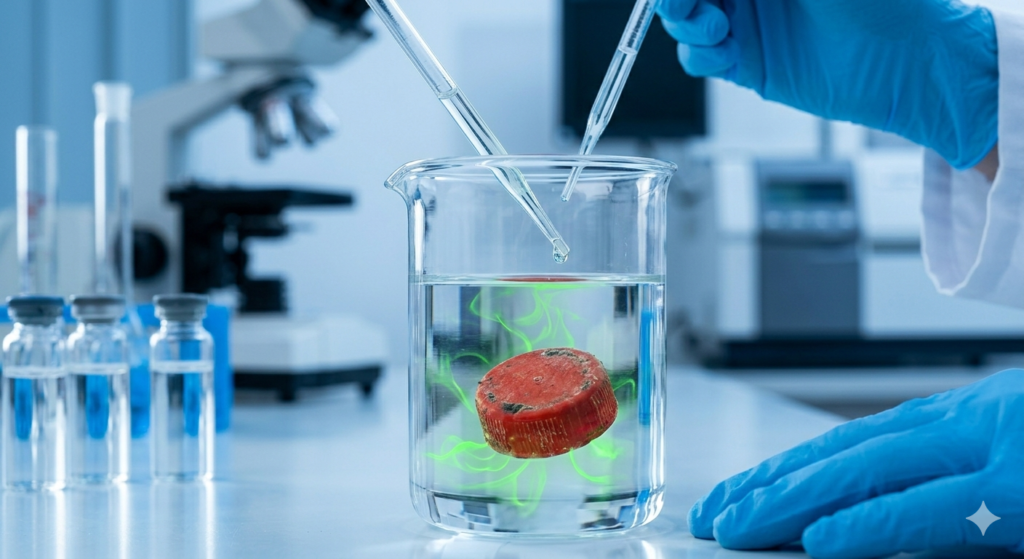
The image above showed the physical intrusion of plastic. The next image visualizes the invisible chemical effect. This is a scientific concept, difficult to photograph, but critical to understand.
Image 2: Visualizing the Chemical Leach. In this conceptual lab shot, we see a single degraded bottle cap (much like those in the albatross nest) submerged in water. The swirling fluorescent green tracers are a visual metaphor for the invisible toxins—BPA and phthalates—constantly leaching from old plastic.
4. Human Health Implications
These leached chemicals are known endocrine disruptors. They mimic or block human hormones, potentially leading to reproductive issues, developmental delays in children, and an increased risk of certain cancers (such as breast and prostate cancer). When we ingest microplastics that have absorbed environmental toxins and are simultaneously leaching their own additives, we are exposing ourselves to a dangerous chemical cocktail.
5. Climate Change Acceleration
The plastic crisis is also a climate crisis. Over 99% of plastic is derived from fossil fuels (oil and gas). The entire lifecycle of plastic—from extraction and refining to manufacture and eventual disposal (incineration)—generates massive amounts of greenhouse gases.
Conclusion: Rethinking Our Relationship
The harm caused by plastic is cumulative, touching wildlife, human health, and the climate. While recycling is often touted as the solution, the reality is that the vast majority of plastic ever created has never been recycled. The only true solution is reduction. We must rethink our relationship with convenience and move toward a circular economy that stops plastic pollution at its source.
Every piece of plastic ever made is still with us, in one form or another. It is time we stop adding to that burden.
Effect of BPA on humanThe Impact of BPA on Hormones and Health

One Response