Introduction
Welcome to the wonderful world of almonds! These versatile, delicious nuts are more than just a snack; they’re a powerhouse of nutrition and a cornerstone of global cuisine. In this blog, we will explore the lifecycle, culinary uses, and surprising varieties of Prunus dulcis. Whether you love them roasted, sliced, or milked, get ready to appreciate the almond like never since.
Part 1: The Beauty of the Almond Orchard
Our journey begins in the vast, sun-drenched orchards, the de facto birthplace of every almond. To truly appreciate the nut, we must first appreciate the blossom. Almond trees are among the first to bloom in spring, painting entire landscapes in delicate hues.
IMAGE 1: Almond Orchard
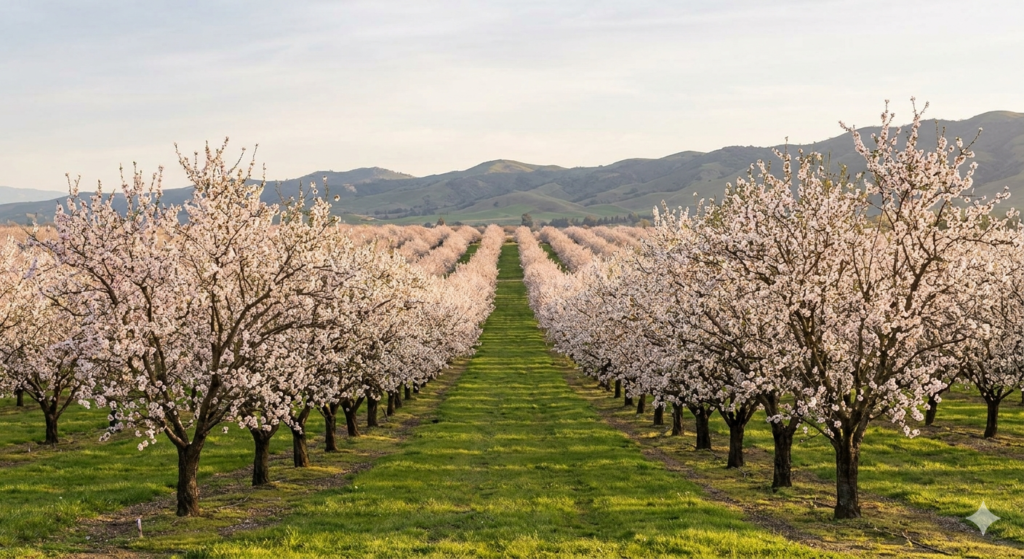
(Image 1: A wide-angle landscape view of a sprawling almond orchard in spring. Row upon row of mature almond trees, covered in white and pink blossoms, stretch towards distant, rolling hills under a soft, golden morning light. This is where the journey begins.)
The orchard in Image 1 is a bee’s paradise and essential for pollination. These neat rows define the landscape, creating depth and a sense of calm. Soon, these blossoms will fall, and the fuzzy green drupes (the hull containing the almond shell) will begin to grow.
Part 2: From Harvest to Kitchen
Fast forward to late summer, and the landscape is different. The blossoms are long gone, and the hulls have dried and split open, revealing the hard shell inside. This is harvest time. Specialized machines gently shake the trees, showering the orchard floor with ripe nuts. Once harvested, the almonds are hulled, shelled, and ready for processing.
This is where the magic happens! The raw almond, so simple in form, is a culinary shape-shifter.
IMAGE 2: Almond Culinary Varieties
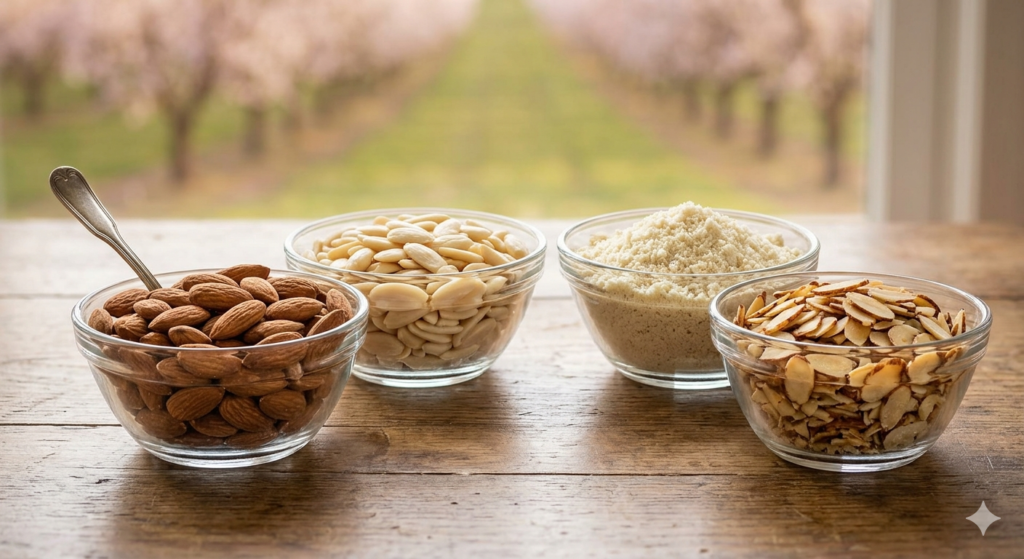
(Image 2: On a rustic wooden table lit by morning light, four glass bowls show the almond’s culinary versatility. From left: raw, skin-on brown almonds; bright, blanched slivered almonds; fine, cream-colored almond flour; and golden-brown, toasted sliced almonds. The soft orchard colors from Image 1 hint at the background.)
Image 2 illustrates just how much texture we can get from one ingredient.
- Whole, Skin-on: The classic snack—crunchy, earthy, and full of fiber.
- Slivered & Sliced: These add elegance and crunch to salads, green beans, or trout amandine.
- Flour (Meal): A gluten-free baking essential that provides moisture and density to cakes, macarons, and crusts.
Part 3: The Ultimate Almond Indulgence
We’ve seen the beauty of the spring bloom and the versatility of the processed nut. Now, let’s combine them into something irresistible. While almonds are healthy, they also define some of the world’s finest desserts.
We are going to make a decadent dessert that uses the textures highlighted in Image 2 (specifically the flour and the toasted slices) and presented in a way that honors the light and warmth of the orchard in Image 1.
IMAGE 3: Decadent Almond Cake
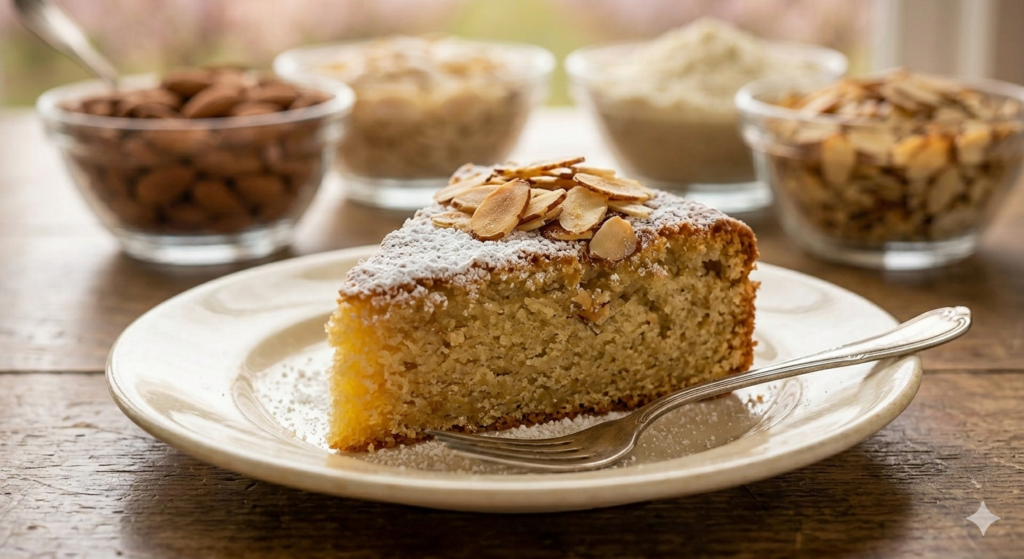
(Image 3: A close-up of a slice of dense, moist almond olive oil cake, sitting on the same rustic table and bathed in the same warm light. It is generously topped with the toasted sliced almonds from Image 2 and a dusting of powdered sugar. The texture of the crumb is sharp and inviting, offering the ultimate almond indulgence.)
This flourless almond olive oil cake (Image 3) is a celebration of the nut. The crumb is incredibly moist, thanks to the almond flour (Image 2), and the top is adorned with the golden, toasted slices we admired earlier. When you take a bite, the toasted crunch contrasts perfectly with the velvety cake. It’s a simple, elegant dessert that brings the whole almond story full circle, back to the warm light of the orchard.
Conclusion
The journey of the almond, from a delicate spring blossom in a sun-drenched orchard to a nutritious snack, a versatile cooking ingredient, and finally, a decadent dessert, is truly remarkable. Next time you grab a handful of almonds or enjoy a slice of almond cake, take a moment to appreciate the depth of flavor and the beautiful journey of this incredible nut.